Project intake: load, route, duty and service evidenceRequest the correct regional contact
Operating-profile industries

Baoli Industries

Compare forklift requirements through load stability, route geometry, shift intensity, traffic interactions and recovery rules. An industry label cannot substitute for a measured application basis.

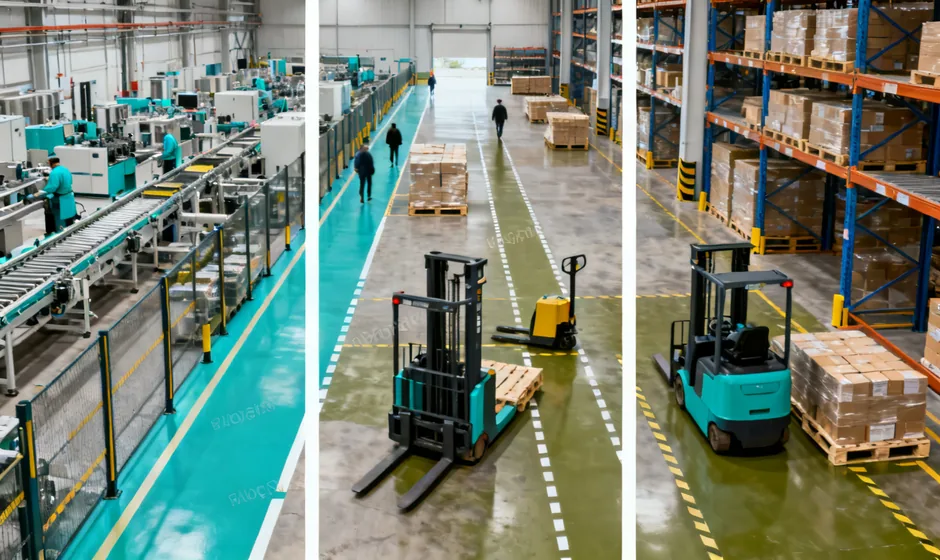
Forklift operating profiles across manufacturing and distribution warehouse zones
Profile matrix

Use the same comparison fields across operating environments

The matrix identifies questions to measure. It does not assert that one truck configuration covers every load, market or workplace rule.

ProfileLoad patternDuty / peakPrimary boundary
ManufacturingRepeatable containers and line-side palletsTakt calls, shift peaks, production stopsShared tugger traffic and blocked stations
Distribution centerMixed inbound pallets and outbound stagingReceiving waves and carrier cutoffsBuffer occupancy and damaged loads
Retail replenishmentStore-order pallets with variable SKU mixDispatch waves and short staging windowsSequencing, wrap condition and scan confirmation
Food & beverageStable unit loads with hygiene or temperature rulesProduction rhythm and door-open limitsCondensation, cleaning and energy location
Controlled goodsTraceable loads and restricted accessBatch release and audit windowsAuthorization, records and deviation closure
Flow stage by vertical

Follow the pallet through the task, not just the truck

Manufacturing

Line-side replenishment

  1. Call: PLC, kanban or operator request identifies material and destination.
  2. Collect: fork entry, container condition and load identity are confirmed.
  3. Move: route priority and shared traffic are managed against takt.
  4. Recover: blocked station and missed call receive explicit ownership.
Distribution

Inbound putaway

  1. Receive: pallet damage, overhang and mass are checked.
  2. Stage: occupancy and release logic prevent uncontrolled queues.
  3. Store: aisle width, rack interface and residual capacity govern the lift.
  4. Close: location confirmation and rejected-load handling are recorded.
Controlled storage

Zoned transfer

  1. Authorize: operator, load and destination access are verified.
  2. Transition: door, temperature and condensation conditions are observed.
  3. Place: handling method protects traceability and packaging state.
  4. Document: exceptions, quarantine and release authority remain visible.
Exception patterns

Peak output and recoverable operation pull in different directions

A tightly optimized route can reduce travel in a stable design case, while alternate paths, spare equipment and buffer capacity can support recovery during disruption. Added resilience may also add cost, space and operating complexity. Compare both sides against the consequence of a stopped task.

Fixed automation may provide deterministic flow for stable, high-volume movements. Industrial trucks preserve route flexibility and phased change, but depend more directly on operator practices, traffic controls and repeatable supervision. Neither approach is universally preferable; the warehouse profile and acceptance method decide.

Unstable or damaged load

Stop, isolate and identify who may rework, reject or move the unit. Do not treat fork adjustment alone as the procedure.

Blocked destination

Define safe waiting, alternate location, task cancellation and communication to upstream operations.

Energy constraint

Protect the required operating reserve by aligning charging or fuel access with real breaks and peak windows.

Equipment fault

Name parking, isolation, diagnostic, recovery and return-to-service authority before the shift depends on it.

Rated load, residual capacity, turning clearance, emissions suitability and workplace compliance are model-, configuration-, market- and application-specific. Confirm them in approved product documentation and the site risk review.
Compare one representative route

Bring the load and the exception that matters most

Include mass, load center, lift height, clear aisle in millimeters, floor condition, movements per hour, peak duration, crossings and the normal method for dealing with a blocked or unstable load.

Send the Operating Profile

Evidence set

  • Load drawing and pallet condition
  • Route and rack/interface survey
  • Normal and peak duty profile
  • Traffic and energy rules
  • Acceptance and recovery owner