Ask before assuming
Missing data is recorded as an open item, not filled with a convenient number.

Material handling becomes easier to manage when the application basis, equipment boundary and handover duties are written in the language used by operators, maintenance teams and procurement.
A forklift selection can look simple when reduced to capacity and lift height. The real operating story includes a damaged pallet at receiving, a load whose center shifts beyond the nominal point, a tight turn beside a pedestrian door, a floor joint on the braking approach and a peak hour when charging access disappears. These are not edge decorations; they are inputs to the equipment and operating concept.
The review therefore starts with a representative movement. The load is described in kilograms and dimensions, the center of gravity is noted, the fork entry is checked and the target height is connected to residual capacity. The route is walked for clear width, overhead obstructions, gradients, dock plates, visibility and mixed traffic. Duty cycle is separated into travel, lift, idle and peak windows so the energy plan can be evaluated against the actual shift.
“A helpful recommendation shows which fact changed the shortlist and which fact still needs verification.”
This page does not rely on unverified founding dates, employee counts or anonymous client claims. Trust comes from a traceable method: state the basis, expose the limitation, test the representative task and give unresolved items a named owner before handover.
Missing data is recorded as an open item, not filled with a convenient number.
Rated load, residual capacity and site suitability remain distinct decisions.
Operators, pedestrians, maintenance and energy access share the same system.
Training, inspection, service routing and exception authority receive owners.
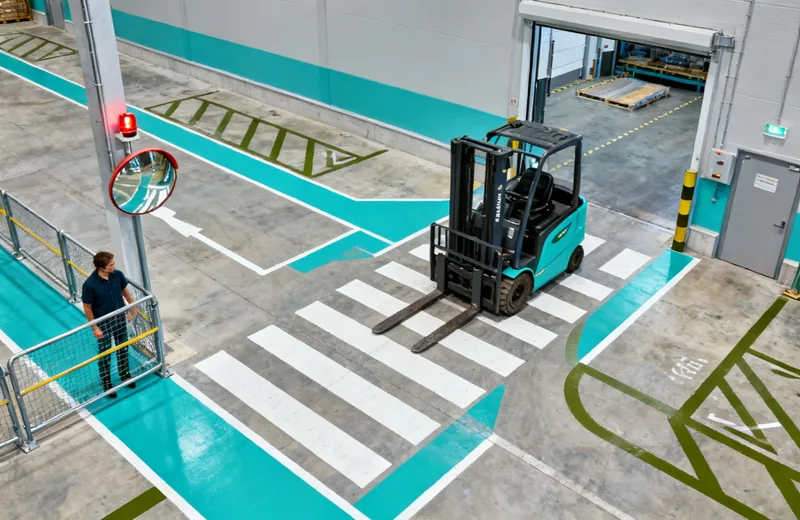
Operators, pedestrians, delivery drivers, maintenance staff and supervisors encounter the equipment in different states. A route review should show crossings, blind corners, speed controls, parking positions, battery or fuel access and the safe method for dealing with a blocked or unstable load.
Training and authorization depend on the jurisdiction, equipment, attachment and workplace rules. Powered industrial truck requirements such as OSHA 29 CFR 1910.178 may be relevant in the United States, while other markets use different legal frameworks. Applicability and evidence must be confirmed for the actual location; this page does not claim certification for a particular product.
The aim is a usable operating boundary: warnings remain visible, inspections fit the shift, operators know when to stop, and maintenance can reach the asset without creating a second hazard.
Share a route sketch, representative load and the point where the current process loses time, visibility or control. Mark what has been measured, what is assumed and what must be decided.