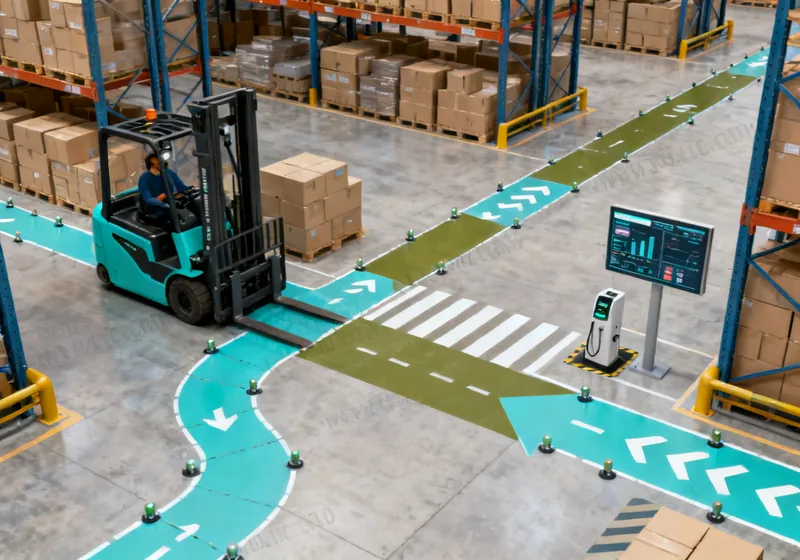
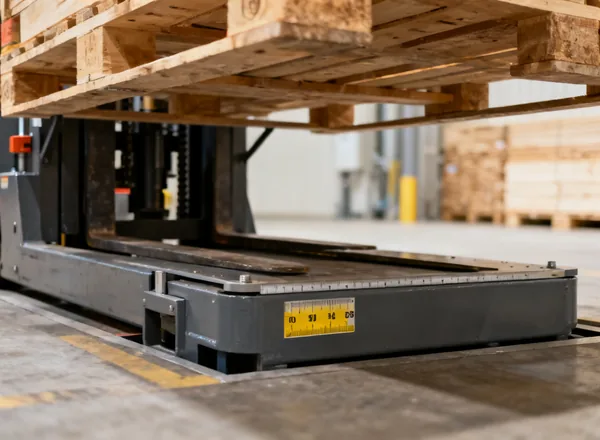
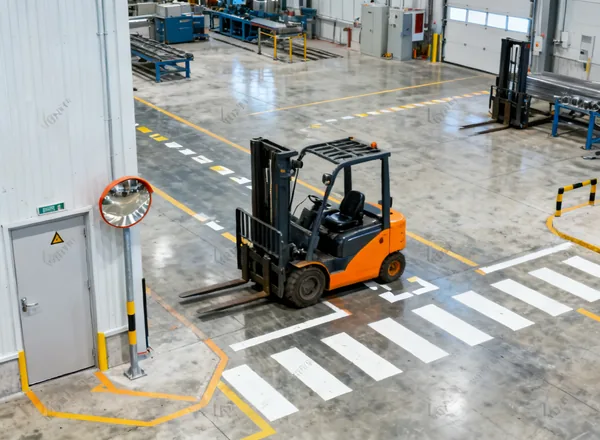
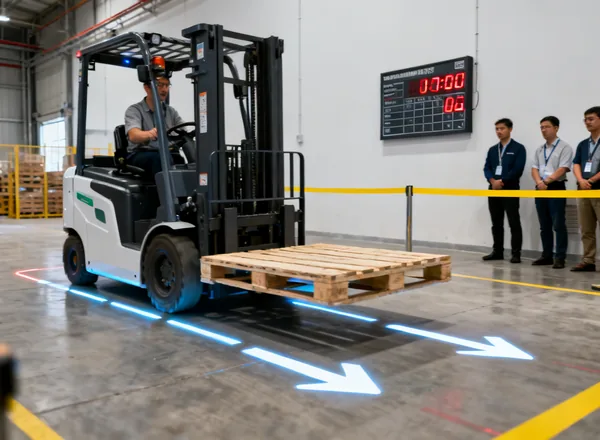
Many warehouses do not move from manual handling to automation in one clean step. Loads, racks, doors, upstream systems and working practices already exist. A first phase can therefore focus on disciplined truck selection and route control: stable pallet presentation, measured aisle geometry, consistent pickup locations, visible traffic priorities and an energy plan that fits the shift.
“Automation readiness is the removal of hidden variation—not the purchase of a label.”
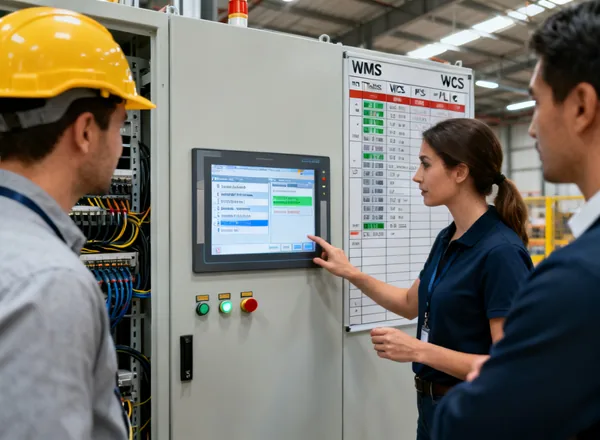
The second phase can instrument the process. Task calls, scan events, queue time, battery state, damage exceptions and completed moves become usable records. If WMS, WCS, WES or PLC messages are expected later, their ownership and timing are described before an interface is promised. Manual and digital records may coexist while the business confirms which signal is reliable enough to control work.
The third phase compares fixed automation and flexible robotics against the actual movement profile. Fixed equipment can offer deterministic capacity for stable flows; mobile systems can support phasing and route change. Flexibility still requires stable load presentation, traffic rules, charging and exception recovery. The correct comparison includes peak throughput, buffer occupancy, graceful degradation, maintenance access and brownfield cutover—not headline rate alone.
“A phase is complete when operations know the normal state, the fallback state and who authorizes the change between them.”
The final release is bounded by representative tests. Inputs, preconditions, expected results, logs, exclusions and unresolved issues are recorded. For a conventional forklift fleet this may be an application and commissioning protocol; for an integrated or automated system it may extend to emulation, FAT and SAT. The terminology changes, but the evidence chain remains.